



The Materials Bet: What Things Are Made Of Is Europe’s Next Strategic Layer
On 21 April, EU scientific advisors handed Commissioner Zaharieva a 31-pathway blueprint for an Advanced Materials Act — the first time Europe treats materials as a legislative priority on par with AI and chips. Combined with Bosch’s SiC volume production, Fraunhofer’s 1m² nanolithography, and eight institutes’ circular-economy showcase, a coherent European materials autonomy strategy is coming into focus.

On 21 April 2026, the EU's Scientific Advice Mechanism formally handed Commissioner Zaharieva an evidence review and expert opinion on advanced materials, backed by a KIT-led panel and translated into 31 specific policy pathways [1]. The document recommends automated laboratories, digital twins for materials discovery, and FAIR data standards to close Europe's materials scale-up gap — and it is explicitly designed to feed the legislative drafting of a forthcoming Advanced Materials Act. This is the first time that advanced materials have appeared on the EU's legislative priority list alongside the AI Act and the European Chips Act, and it marks the point at which Europe is treating what things are made of as a strategic autonomy question, not merely an industrial policy one.
In the same week, Bosch began volume production of third-generation silicon carbide power chips on 200mm wafers at its Reutlingen facility, backed by €3B in IPCEI semiconductor investments [2]. Fraunhofer IOF announced a €4M DFG-funded project to develop 3D nanolithography and nanomeasuring capability at 1 square metre scale with sub-atomic positioning accuracy — three times larger than the current state of the art — targeting quantum photonic component manufacturing [4]. Eight Fraunhofer institutes announced a joint IFAT Munich showcase of near-market circular economy technologies: phosphorus recovery from wastewater, rare-metal extraction from e-waste, wind-turbine blade recycling [6]. And researchers at Politecnico di Torino published results from the ERC-funded CO2CAP project showing a supercapacitor that simultaneously captures industrial CO₂ and converts the capture process into electrical energy using ionic liquid electrolytes [7]. Read together, these are not isolated materials science announcements. They are the evidence base for a European materials strategy with two distinct axes — new materials that enable next-generation hardware, and circular recovery that closes the raw-material dependency loop — converging on the same legislative moment.
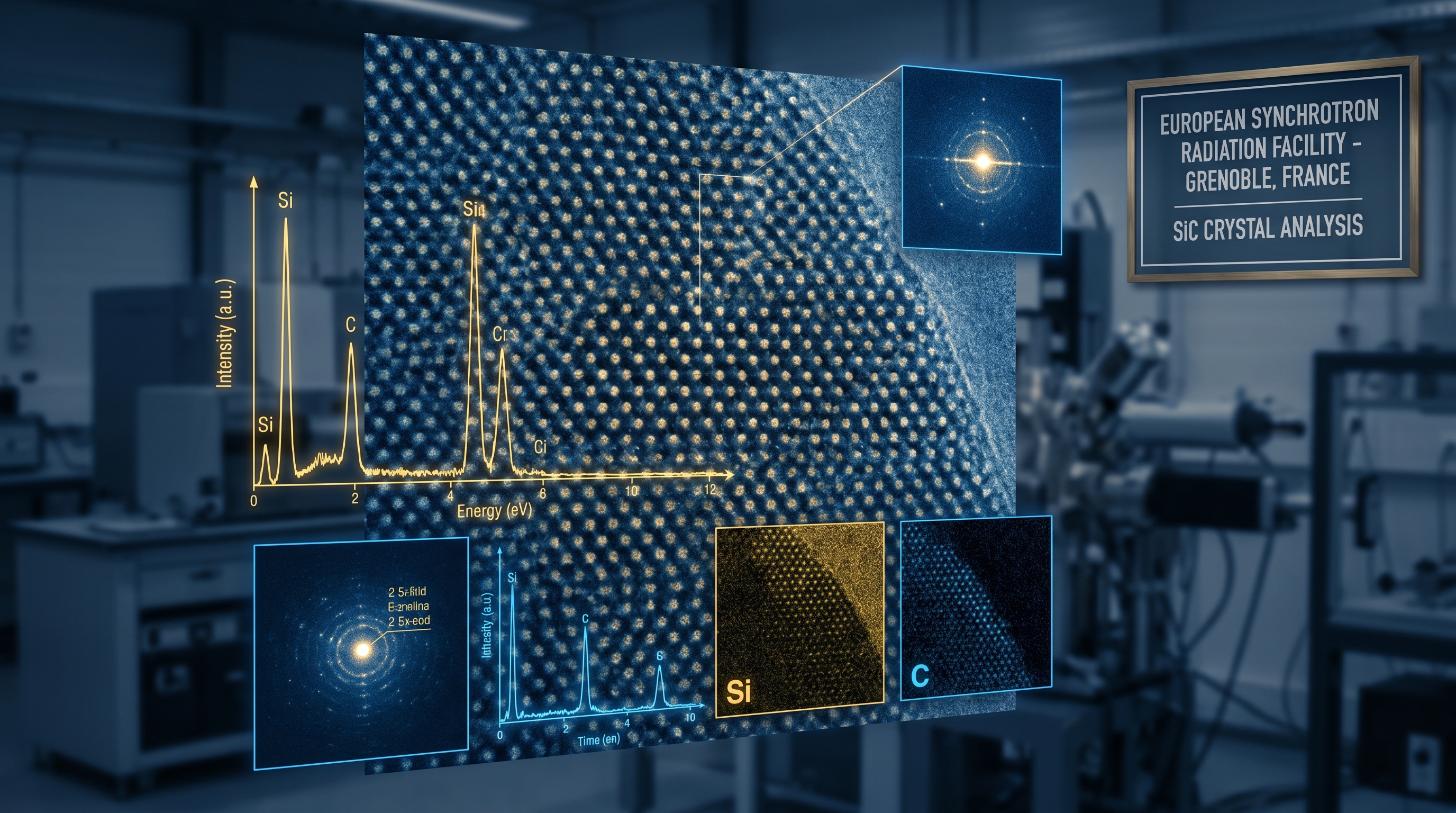
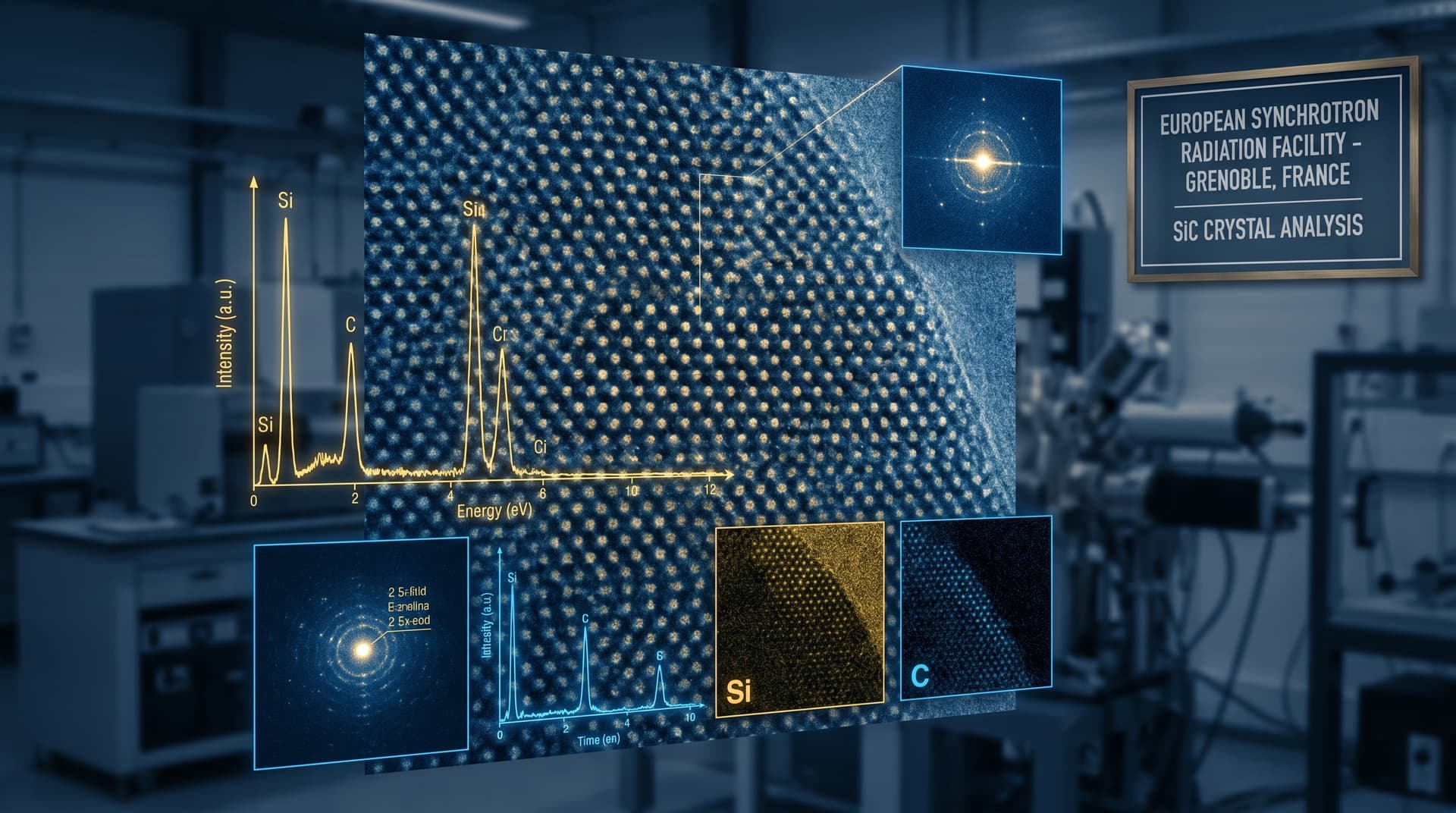
From SiC power chips to quantum photonic substrates to circular material recovery: Europe's advanced materials agenda spans the full range from volume production to atomic-scale frontier research.
The Blueprint and the Act
The 31-pathway framework delivered on 21 April is the product of a process that began with the EU's Scientific Advice Mechanism commissioning an independent evidence review and then convening a KIT-led expert panel to translate the review into specific policy recommendations. The recommendations cluster around three principles: automation and acceleration (materials acceleration platforms, autonomous labs, high-throughput synthesis and characterisation), digitalisation (digital twins for materials development, FAIR data standards enabling international data sharing without dependency concentration), and a materials scale-up mechanism analogous to the NanoIC pilot line that the Chips Act created for semiconductors.
The European Commission's Research and Innovation news coverage explicitly stated that the 31 pathways "will directly shape the forthcoming Advanced Materials Act" [1]. The legislative significance is structural: the AI Act created a governance framework for AI systems operating in Europe; the European Chips Act [9] created a sovereignty and resilience framework for semiconductor supply chains. An Advanced Materials Act would create an equivalent framework for the materials that both AI hardware and clean energy technology depend upon. It would also, for the first time, formally treat critical raw material recovery — through circular economy instruments — as part of the same legislative instrument as new materials development, recognising that supply security requires both primary and secondary sources.
Volume Production: SiC and the European Supply Chain
The gap between materials research and materials volume production is the most persistent structural problem in advanced materials strategy. Policy documents accumulate; production lines do not. Bosch's April 22 announcement that its Reutlingen facility has entered volume production of third-generation SiC chips on 200mm wafers is therefore significant not primarily as a technology milestone but as a supply chain milestone [2].
Silicon carbide power electronics operate at higher switching frequencies, higher temperatures, and lower power losses than equivalent silicon devices. In the context of the energy transition — EV inverters, industrial motor drives, renewable energy converters — these properties translate directly into system efficiency gains. Bosch's third-generation SiC chips target a 20% performance uplift over the prior generation, with mid-three-digit million annual unit capacity at the Reutlingen fab. The €3B in IPCEI semiconductor investments that backed the Reutlingen expansion treated SiC not as an advanced materials research priority but as a supply chain resilience requirement: European automotive and industrial manufacturers cannot maintain sovereignty over their electrification programmes if their primary SiC substrate is sourced from non-European suppliers. Volume production on 200mm wafers — the current industry-standard wafer size for SiC, analogous to the role 300mm wafers play in classical silicon — is the proof point that the IPCEI investment is producing manufacturing outcomes, not just research outputs.
The imec SPINS consortium (25 partners, €50M, EU Chips JU) applies the same logic one step further, targeting spin qubits on 300mm semiconductor wafers — using the process design kit and multi-project wafer logic of semiconductor manufacturing to treat quantum hardware substrates as a materials engineering problem [5]. This is the materials-layer reading of a story that Article 5 in this series examined from the quantum hardware perspective: the same initiative, read as a materials story, is about applying industrial semiconductor manufacturing logic to a new substrate class.
Four Frontiers of the Materials Stack
SiC: European Volume Production
Bosch Reutlingen: third-generation SiC chips on 200mm wafers, 20% efficiency uplift, mid-three-digit million annual unit capacity. €3B in IPCEI investments delivering manufacturing outcomes. European automotive and industrial firms now have domestic SiC supply rather than dependence on non-European sources — the supply chain resilience argument for advanced materials made concrete [2].
Quantum Substrates: 300mm Wafer Manufacturing
imec SPINS consortium: spin qubits on 300mm semiconductor wafers. PDKs and MPW runs for mass-producible European quantum chips by 2031. The insight is materials-layer: quantum hardware substrates treated with semiconductor manufacturing discipline rather than physics-lab customisation — a substrate-first argument for quantum supply chain resilience [5].
Atomic-Scale Patterning: 1m² at Sub-Atomic Precision
Fraunhofer IOF / FSU Jena / TU Ilmenau: €4M DFG-funded 3D nanolithography and nanomeasuring machine at 1m² scale with sub-atomic positioning accuracy — three times larger than current state-of-the-art. Foundational for next-generation quantum photonic component manufacturing [4]. This is the materials patterning layer on which photonic quantum computing — represented in this series by EuroHPC's Lucy — will ultimately depend.
Semiconductor Frontier: Sub-2nm EUV
Imec received ASML's EXE:5200 High NA EUV system — the world's most advanced chip lithography system — as part of the EU-funded NanoIC pilot line. Sub-2nm logic and high-density memory R&D, full qualification expected Q4 2026 [3]. Europe's presence at the angstrom-era semiconductor materials frontier, where the physical limits of transistor scaling are probed directly, underpins the substrate research that CMOS 2.0 and future chip generations will draw on.
The Two-Axis Strategy
The four frontiers above are all oriented toward new materials — novel substrates, frontier patterning, advanced fabrication. But Europe's materials autonomy problem has a second dimension that is structurally different: critical raw material dependency. The transition to AI hardware, electric vehicles, and clean energy requires lithium, cobalt, rare earth elements, and critical metals whose primary extraction is geographically concentrated in ways that create supply chain exposure regardless of how well European advanced materials research performs. The answer to this exposure is circular recovery: closing the material loop so that secondary sources (recovered from waste) reduce the dependence on primary sources (mined from politically concentrated geographies).
Node size reflects relative capital scale. X-axis: materials approach (circular ↔ new synthesis). Y-axis: technology readiness (research ↔ production). Sources: [1]–[8].
The two axes of the diagram are not competing strategies. They are complementary responses to the same structural problem. Europe's critical materials dependency has two roots: insufficient scale and performance of certain advanced materials produced in Europe (addressable by new materials R&D and scale-up), and dependence on primary extraction of critical raw materials concentrated in politically sensitive geographies (addressable by circular recovery). The Advanced Materials Act blueprint is significant precisely because its 31 pathways span both axes. No prior EU legislative instrument — not the Critical Raw Materials Act [10], not the Chips Act, not Horizon Europe's materials calls — has treated new synthesis and circular recovery as a unified materials autonomy agenda. The April 21 blueprint is the policy architecture for doing so.
Circular Materials as Strategic Supply
The Fraunhofer IFAT showcase is the most immediate evidence of the circular recovery axis. Eight institutes will present three technology clusters at IFAT Munich (May 4–8): phosphorus and nitrogen recovery from wastewater, rare-metal extraction from e-waste, and wind-turbine composite blade recycling under the RECREATE EU project [6]. Fraunhofer's coverage describes these technologies as near-market — available for licensing and pilot partnerships, not still in laboratory stages. The strategic significance of each cluster is specific: phosphorus and nitrogen are critical agricultural inputs whose primary supply is geographically concentrated; rare metals recovered from e-waste reduce dependence on virgin mining for electronics and battery production; composite blade recycling addresses a growing European waste stream while recovering the advanced materials (glass fibre, carbon fibre, epoxy) that the next generation of wind turbines will require.
The ERC CO2CAP result from Politecnico di Torino adds a fourth circular dimension with a novel twist. The CO2CAP supercapacitor captures industrial CO₂ from exhaust streams and simultaneously converts the electrochemical energy of CO₂ absorption into usable electrical energy, using ionic liquid electrolytes [7]. The ERC's coverage noted the relevance to the EU Battery Alliance's 30 gigafactory rollout target by 2030: industrial manufacturing lines that generate CO₂ as a byproduct could, with this technology, recover both the carbon and a portion of the energy consumed in its production. The ionic liquid electrolyte is the materials innovation at the core of the device — a class of room-temperature liquid salts with electrochemical properties that enable selective CO₂ absorption while conducting charge.
The LIFE Programme's €601.5M in 2026 calls, opened April 21, provides the public financing layer for scaling circular economy technologies from demonstration to commercial deployment [8]. With a September 2026 deadline for Strategic Area Projects, CINEA explicitly positioned LIFE 2026 as a priority window for organisations with applied environmental technology ready to demonstrate at industrial scale. For the Fraunhofer circular recovery technologies, LIFE is the public funding instrument that could bridge the gap between near-market demonstration and commercial pilot.
"After AI and chips, advanced materials is the third leg of Europe's strategic autonomy bet — spanning new materials that enable the next hardware generation and circular recovery that closes the raw-material dependency loop that new materials alone cannot solve."
Capital by Materials Category
| Initiative | Amount | Category | Status |
|---|---|---|---|
| Bosch SiC (IPCEI total) | €3,000M+ | New materials (SiC production) | Volume production (Apr 2026) |
| EU LIFE Programme 2026 | €601.5M | Circular economy / clean energy | Open (deadline Sep 2026) |
| imec SPINS (EU Chips JU) | €50M | Quantum substrates (300mm wafer) | Consortium launched |
| imec High NA EUV (NanoIC) | System installed | Semiconductor frontier (<2nm) | Qualification Q4 2026 |
| Fraunhofer IOF 3D NLM | €4M | Quantum photonic patterning | Research project launched |
| ERC CO2CAP | €1.5M | Circular (CO₂ capture + energy) | Results published |
Log scale required due to range from €4M to €3B+. Sources: [2], [5], [6], [8].
Tensions and Tests
The case for a coherent European materials strategy is stronger in April 2026 than it was six months earlier, and the April 21 blueprint is the clearest policy signal the series has yet seen of materials moving to the legislative priority tier. But three structural tensions deserve acknowledgement.
Scale-up remains the defining challenge. The SAM expert panel's central diagnosis — that Europe has a materials scale-up gap — is the same gap that has characterised European advanced materials programmes for decades. The Advanced Materials Act blueprint's recommended tools (automated labs, digital twins, FAIR data) are acceleration infrastructure; they reduce the time from laboratory discovery to scale-up decision, but they do not eliminate the capital intensity of the scale-up process itself. Bosch's SiC volume production is the exception that proves the rule: it took €3B in IPCEI investment and years of development to bring one material system to European volume production. Not every material in the Advanced Materials Act's scope will have an industrial champion with comparable capital resources and strategic rationale.
The Advanced Materials Act is a blueprint, not legislation. The 31-pathway framework is advisory input to a future legislative instrument. EU legislation from expert opinion to enacted regulation typically takes two to four years. The materials whose scale-up timelines are most urgent — quantum substrates, photonic materials, next-generation power electronics — are unlikely to wait for legislative frameworks before the first commercial production decisions must be made.
Circular recovery economics are sensitive to primary material prices. The near-market status of Fraunhofer's phosphorus recovery, rare-metal extraction, and blade recycling technologies depends on comparative economics against primary sources. When primary rare earth or phosphorus prices fall, secondary recovery becomes less competitive regardless of the technology's maturity. The Critical Raw Materials Act's [10] provisions for strategic reserves and diversified sourcing provide some policy insulation, but the economic viability of circular recovery remains sensitive to market conditions that EU legislation cannot fully control.
Looking Ahead
- IFAT Munich, 4–8 May 2026: Eight Fraunhofer institutes will present near-market circular economy technologies. The licensing and pilot partnership announcements at IFAT will determine how quickly the phosphorus recovery, rare-metal extraction, and RECREATE blade recycling technologies enter industrial deployment [6].
- LIFE Programme Strategic Area Projects deadline — September 2026: The €601.5M LIFE 2026 calls, open from April 21, provide the primary public financing route for scaling circular economy technologies. Applications close in September, with results expected in 2027 [8].
- imec High NA EUV qualification — Q4 2026: Full qualification of the ASML EXE:5200 system will establish the operational baseline for sub-2nm materials research at the NanoIC pilot line [3].
- Advanced Materials Act consultation: Following the April 21 blueprint delivery, the Commission's next step is a legislative consultation process. The scope and timeline of that consultation will determine how quickly the 31 pathways move from expert recommendation to regulatory instrument.
References
[1] European Commission, Directorate-General for Research and Innovation, "Experts call for EU policies on advanced materials to prioritise autonomy, safety, sustainability and prosperity," Apr. 21, 2026. [Online]. Available: https://research-and-innovation.ec.europa.eu/…2026-04-21_en
[2] Electrive, "Bosch targets efficiency gains with third-gen SiC chips," Electrive, Apr. 22, 2026. [Online]. Available: https://www.electrive.com/2026/04/22/bosch-targets-efficiency-gains-with-third-gen-sic-chips/
[3] imec, "imec receives world's most advanced high NA EUV system," imec Press, Mar. 18, 2026. [Online]. Available: https://www.imec-int.com/en/press/imec-receives-worlds-most-advanced-high-na-euv-system
[4] Fraunhofer IOF, "3D NLM machine: nanolithography and nanomeasuring at square-metre scale," 2026. [Online]. Available: https://www.iof.fraunhofer.de/en/pressrelease/2026/3D-NLM-machine.html
[5] SiliconANGLE, "Quantum technologies: EU hybrid computing strategy — World Quantum Day," SiliconANGLE, Apr. 15, 2026. [Online]. Available: https://siliconangle.com/2026/04/15/quantum-technologies-eu-hybrid-computing-strategy-hpeworldquantumday/
[6] Fraunhofer-Gesellschaft, "Fraunhofer at IFAT Munich 2026," Apr. 2026. [Online]. Available: https://www.fraunhofer.de/en/press/research-news/2026/april-2026/fraunhofer-at-ifat-munich-2026.html
[7] European Research Council, "Capturing and purifying CO2 while producing energy," ERC News, Apr. 2026. [Online]. Available: https://erc.europa.eu/news-events/news/capturing-and-purifying-co2-while-producing-energy
[8] CINEA, "LIFE calls for proposals 2026: EUR 601.5 million for a greener, more competitive Europe," Apr. 21, 2026. [Online]. Available: https://cinea.ec.europa.eu/news-events/news/life-calls-proposals-2026-eu6015-million-greener-more-competitive-europe-2026-04-21_en
[9] European Commission, "European Chips Act," Digital Strategy, Sep. 21, 2023. [Online]. Available: https://digital-strategy.ec.europa.eu/en/policies/european-chips-act
[10] European Commission, "Critical Raw Materials Act," 2024. [Online]. Available: https://single-market-economy.ec.europa.eu/sectors/raw-materials/areas-specific-interest/critical-raw-materials/critical-raw-materials-act_en
Pulse News Team
ResearchArk